Thursday, August 29, 2013

.02 WAT up!

If you don't know about Mabus, 

one should look up WAT

 Nostradamus quatrain sad about

The O bomb Ma Bus shhhit ... 
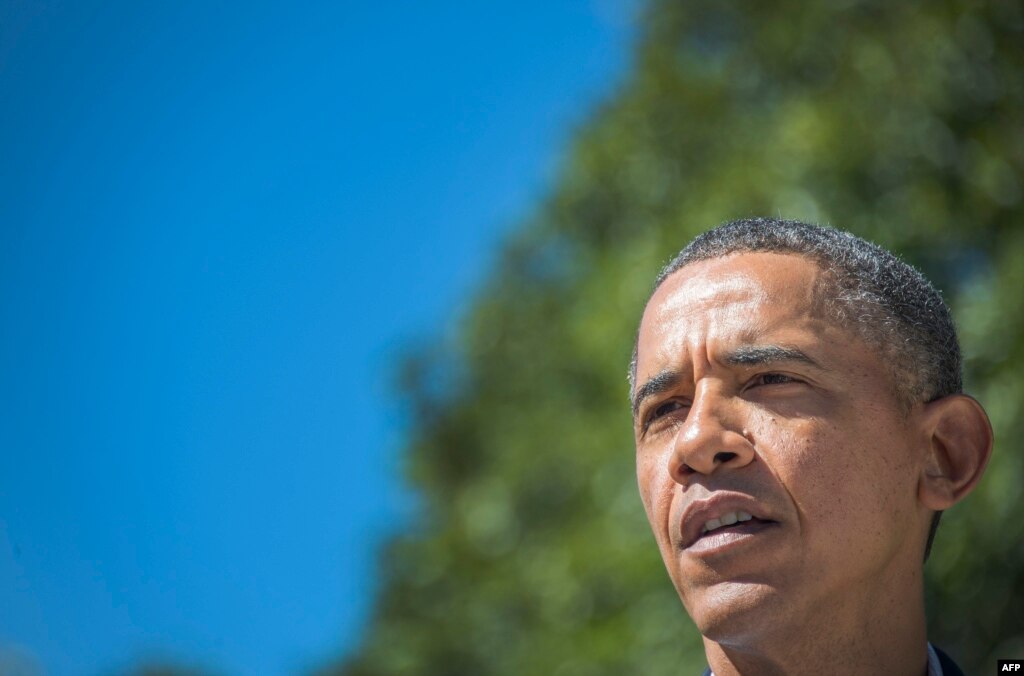
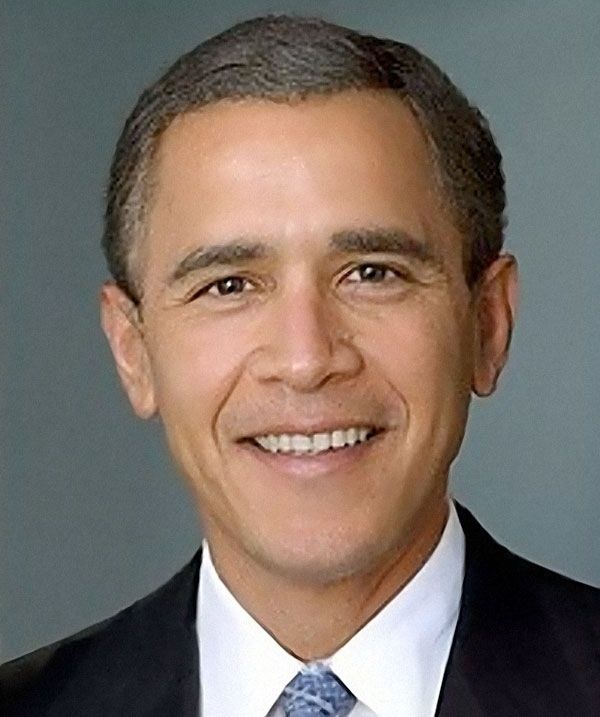
Honestly I do like the guy, but do you think B-rock knows anything about destiny and how he morphed into this Bush picture to foe fill the end time prophecy? The man of peace, will go down as WAT ... Syria-us- ly one should be asking the question ...
Is he about to start World War 3?

Look at all the prophecies ...  If you want to be a seer, you need to take this test to get a WAT  ...

question 1
Last full year of this time period calandar was.... ?
If you answer right your at this "My End" level and receive a free Mayan Calandar

question 2

Given the fact, made by Pope B (God told his resignation to sit and garden...) so Pope F could be in the picture to fulfill the Prophecy of the Popes (Latin: Prophetia Sancti Malachiae Archiepiscopi, de Summis Pontificibus) is a series of 112 short, cryptic phrases in Latin ... (if you want to learn cryptic) 

Many proponents of the prophecies claim that Pope Francis corresponds to "Peter the Roman" the pope described in the final prophecy, whose pontificate will allegedly bring the destruction of the city of Rome and usher in the beginning of the Apocalypse.


Would this be considered an "inside" job if messages are being whispered into people's minds?

If you got this answer right you made WAT and receive a degree to keep this knowledge in my bank at the minimum level required, roughly equal to .02¢

Please do not fall below this level, or it could cost your sanity and other to question your ability to see    as you try to grasp the golden coins that light up the image that forms in a head and get ZZZapped!

Last question
How many WATs  does it take "2" see any of the armies that are building up around Isreal when it is foretold centuries ago the time period and the mannerism of how a World leader who claims to be about peace,.. Fires into World War 3?

Hmmm let me put a WAT on... Dopey so all the little people (children) can saves some of dopey .02¢ coin .... Hiding some place under this bLOG


Wednesday, August 28, 2013

Obama set to strike ...

Make no doubt about it ... The US is going to war ... 

Reuters) - President Barack Obama made the case on Wednesday for a limited military strike againstSyria in response to last week's chemical weapons attack even as he faced new obstacles with British allies and U.S. lawmakers that could delay any imminent action ...

Obama has already made up his mind... This is going to happen!
The UK has put a suggested resolution to the five permanent members of the UN Security Council "authorising all necessary measures to protect civilians" in Syria.
It calls for military action against what Britain has termed Syria's "unacceptable" use of chemical weapons.
But Russia has said the UN must finish its investigation into the claims before discussing any resolution.
Syria has accused the West of "inventing" excuses to launch a strike.
"Western countries, starting with the United States, are inventing fake scenarios and fictitious alibis to intervene militarily in Syria," Prime Minister Wael al-Halqi said on Syrian state television.

At the scene

Syrians continue to go about their daily lives nervously, despite the intensification of media interest and statements about the possibility that Syria will face a military strike.
Some families have decided to move to safer areas in the countryside far from the cities. Some of those who live near military sites or government complexes have done similarly, following the Syrian media's recent focus on the Syrian military and governmental targets that might be hit in a potential Western military strike against Syria.
Despite this, Syrian government departments are continuing their work as usual, the shops continue to receive customers and the streets of the Syrian capital remain choked by traffic.
Some Syrians were reassured this afternoon by Syrian Foreign Minister Walid Muallem and his defiant speech about the strike which the Western nations are threatening to carry out against Syria and its government.
British Foreign Secretary William Hague told reporters the international community had a responsibility to take action against the Syrian government, even if agreement could not be reached at the UN.
The Syrian government has strongly denied that it used chemical weapons and blames opposition fighters for the attack on 21 August, which reportedly killed hundreds of people near Damascus.
A team of UN weapons inspectors is currently investigating the sites of the attack. UN General Secretary Ban Ki-moon said the experts were expected to finish their investigation in four days and would need more time after that to analyse their findings.
Mr Ban appealed for the team to be given "time to do its job".
And in a phone conversation with Mr Hague, Russian Foreign Minister Sergei Lavrov said a draft resolution should not be considered until the inspectors had reported.
Russia and China have previously vetoed resolutions critical of Syria.
In a separate development, Syria's ambassador to the UN, Bashar Jaafari, asked for the inspectors to investigate three cases of the use of chemical weapons in the last week against "dozens" of government troops in Damascus suburbs.
'Give peace a chance'
Britain's National Security Council "unanimously" backed action against Syria over its "unacceptable" chemical weapons use, Prime Minister David Cameron said earlier on Wednesday.
He had gathered the UK's armed forces and security chiefs with key cabinet ministers for emergency talks over possible military action, ahead of the UN Security Council meeting.
UN Syria envoy Lakhdar Brahimi: "This confirms how dangerous the situation in Syria is"
On Thursday, British MPs are set to vote on a government motion condemning the attack, but the vote will not authorise direct UK involvement in military action.
The motion says UN weapons inspectors should be allowed to report to the Security Council, after which a further vote on military action may be taken.
Britain's proposed UN resolution would condemn the "chemical weapons attack by [Syria's President] Assad", Mr Cameron added.
Mr Ban earlier called on the council's permanent members - China, Russia, France, the US and the UK - to act together.
"The body interested with maintaining international peace and security cannot be 'missing in action'," Mr Ban said.
He added: "Give peace a chance. Give diplomacy a chance. Stop fighting and... start talking."
The meeting of the five permanent members has now finished, but the UK, US and France are continuing talks. No representative of any of the five countries was prepared to comment officially after the meeting.

Models for possible intervention

  • Iraq 1991: US-led global military coalition, anchored in international law; explicit mandate from UN Security Council to evict Iraqi forces from Kuwait
  • Balkans 1990s: US arms supplied to anti-Serb resistance in Croatia and Bosnia in defiance of UN-mandated embargo; later US-led air campaign against Serb paramilitaries. In 1999, US jets provided bulk of 38,000 Nato sorties against Serbia to prevent massacres in Kosovo - legally controversial with UN Security Council resolutions linked to "enforcement measures"
  • Somalia 1992-93: UN Security Council authorised creation of international force with aim of facilitating humanitarian supplies as Somali state failed. Gradual US military involvement without clear objective culminated in Black Hawk Down disaster in 1993. US troops pulled out
  • Libya 2011: France and UK sought UN Security Council authorisation for humanitarian operation in Benghazi in 2011. Russia and China abstained but did not veto resolution. Air offensive continued until fall of Gaddafi
Meanwhile, in a briefing to journalists, joint UN-Arab League envoy to Syria Lakhdar Brahimi said: "It does seem clear that some kind of substance was used... that killed a lot of people" on 21 August.
But he also emphasised that any military action would need Security Council authorisation.
Stocks fall
Iran's Supreme Leader Ayatollah Ali Khamenei said on Wednesday that US intervention would be a "disaster" for the region.
"The region is like a gunpowder store and the future cannot be predicted," Mr Khamenei said, according to Iran's Isna news agency.
Meanwhile the Israeli government has authorised a limited call-up of reserve soldiers. Officials told the BBC that although the likelihood of Israel being drawn into fighting with Syria was very low, the country nevertheless had to prepare for that scenario.
Stocks have fallen on global markets and oil prices have shot up amid growing concern about an impending attack on Syria.
The UN weapons inspectors resumed investigations after having called off work on Tuesday because of security concerns.
On Monday, the team's convoy was shot at by unidentified snipers. One of their cars came under fire as it crossed the buffer zone between government and rebel-controlled areas.
More than 100,000 people are estimated to have died since the conflict erupted in Syria in March 2011.
Map: Forces which could be used in strikes against Syria
Forces which could be used against Syria:
  • Four US destroyers - USS Gravely, USS Ramage, USS Barry and USS Mahan - are in the eastern Mediterranean, equipped with cruise missiles
  • Cruise missiles could also be launched from submarines, including a British Trafalgar class boat. HMS Tireless was reportedly sighted in Gibraltar at the weekend
  • Airbases at Incirlik and Izmir in Turkey, and in Jordan, could be used to carry out strikes
  • Two aircraft carriers - USS Nimitz and USS Harry S Truman are in the wider region
  • The Royal Navy's response force task group- which includes helicopter carrier HMS Illustrious and frigates HMS Montrose and HMS Westminster - is in the region on a previously-scheduled deployment
  • RAF Akrotiri airbase in Cyprus could also be used
  • French aircraft carrier Charles de Gaulle is currently in Toulon in the western Mediterranean
  • French Raffale and Mirage aircraft can also operate from Al-Dhahra airbase in the UAE.

Mabus is ready to strike ... Though it clearly sounds like most countries are backing out of this...

Obama Says Damascus Carried Out Chemical Attack

US President Barack Obama says Washington is convinced Damascus carried out chemical attack, but has not decided yet on whether to take military action.
TEXT SIZE

U
.S. President Barack Obama has said the United States has "concluded" that the Syrian government carried out a large-scale chemical attack on civilians last week but has not made a decision yet on possible military action. 

Speaking on U.S. public TV on August 28, Obama said he is still evaluating possible military options to punish Syria for the August 21 in the suburbs of Damascus that activists say killed hundreds of people.

"If in fact we make a choice to have repercussions for the use of chemical weapons, then the Assad regime, which is involved in a civil war trying to protect itself, will have received a pretty strong signal that in fact it better not do it again," Obama said.

Obama suggested any possible U.S. military response would be limited in scope.

"I have no interest in any kind of open-ended conflict in Syria, but we do have to make sure that when countries break international norms on weapons, like chemical weapons that could threaten us, that they are held accountable," the U.S. leader explained.

China's foreign minister on August 29 urged restraint over Syria, saying any military intervention in the crisis would only worsen turmoil in the Middle East.

Later on August 29, parliament in Britain will meet in emergency session to vote on whether to back international action against Syria.

British Prime Minister David Cameron told British lawmakers he would not back military action in Syria until UN weapons inspectors on the ground in Syria have a chance to report their findings.

The UN inspectors are due to wrap up their 14-day mission in Syria over the weekend.

UN Secretary-General Ban Ki-moon on August 28 urged the inspectors be given time to finish their work.

At the UN Security Council, Britain put forward a draft resolution seeking authorization for the use of force, but Russia, as expected, objected, saying it was too early to consider such a measure.

UN Syria envoy Lakhdar Brahimi said on August 28 that any military action in Syria must have UN approval.

"I think international law is clear on this. International law says that military action must be taken after a decision by the [UN] Security Council. That is what international law says," Brahimi stated.

Also at the UN, Syria's ambassador Bashar Jaafar urged the United Nations to immediately send inspectors to” investigate three instances of  use of  war chemicals  against Syrian servicemen”  in the suburbs of Damascus on August 22, 24, and 25.

Meanwhile, Russian President Vladimir Putin and Iranian President Hassan Rohani spoke by phone about Syria, stressing diplomatic means must be pursued to resolve the crisis.

Based on AP and Reuters reporting
Tuesday, August 27, 2013

News of bigger war coming...


West could hit Syria in days


By Khaled Yacoub Oweis and Erika Solomon
AMMAN/BEIRUT (Reuters) - Western powers could attack Syria within days, envoys from the United States and its allies told rebels fighting President Bashar al-Assad, sources who attended the meeting told Reuters on Tuesday.
U.S. forces in the region are "ready to go", Defense Secretary Chuck Hagel said, as Washington and its European and Middle Eastern partners honed plans to punish Assad for a major poison gas attack last week that killed hundreds of civilians.
Several sources who attended a meeting in Istanbul on Monday between Syrian opposition leaders and diplomats from Washington and other governments told Reuters that the rebels were told to expect military action and to get ready to negotiate a peace.


Washington is wrong on this one if they think things well get better... and rebels can "negotiate a peace" ....  All there going to do is start a bigger war... 

Thursday, August 22, 2013

A bigger war coming ...

Like I have been saying, and less than a month after i posted a chemical attack on a city... A bigger war is coming ... 

Mabus red line has been crossed again.... 


U.S. Weighs Plans to Punish Assad

Possible Military Responses Are Refined After Poison Gas Claims

    By 
  • ADAM ENTOUS
  • , 
  • JULIAN E. BARNES
  •  and 
  • INTI LANDAURO
The U.S. began refining its military options for possible strikes in Syria, officials said, and initiated diplomatic efforts to craft an international response to allegations that Syria's government killed over 1,100 civilians with chemical weapons.
Agence France-Presse/Getty Images
Secretary of State John Kerry has talked to French Foreign Minister Laurent Fabius, right, over Syria.
Officers at the Pentagon on Thursday were updating target lists for possible airstrikes on a range of Syrian government and military installations, officials said, as part of contingency planning should President Barack Obama decide to act after what experts said may be the worst chemical-weapons massacre in more than two decades.
As the Pentagon worked on its options, Secretary of State John Kerry talked by telephone with French Foreign Minister Laurent Fabius and the foreign-policy chiefs of Turkey, Jordan and the European Union, as well as with United Nations Secretary-General Ban Ki-moon, officials said.
The Syrian government denied allegations it gassed its own people, backed by new statements from regime allies Iran and Russia accusing Syrian President Bashar al-Assad's international foes of conspiring against him. U.S. officials said they have seen "strong indications" that chemical weapons were used but that more work was needed to evaluate and collect evidence.
The regime gave no indication, however, that it would agree to Mr. Ban's plea to let U.N. inspectors investigate the chemical-weapons allegations, as Syrian forces pressed on with an offensive in the towns around the capital where the attacks were alleged to have occurred.
U.S. officials who described the military options being revised at the Pentagon stressed that their purpose wouldn't be to topple the regime, but to punish Mr. Assad if there is conclusive evidence that the government was behind poison-gas attacks on Wednesday.
Making its options known could constitute a U.S. warning to Mr. Assad and his backers. It was unclear if Mr. Obama would be prepared to use the options; he has resisted getting entangled militarily in the conflict since the start.

Syria in Mourning

AP
Syrian women in Lebanon hold candles and placards during a vigil against the alleged chemical weapons attack on the suburbs of Damascus, in front the United Nations headquarters in Beirut.
Washington believes the Assad regime has carried out a series of chemical-weapons attacks on a small scale in recent months, but the U.S. is still collecting and analyzing evidence about what transpired Wednesday, officials said.
"Once we ascertain the facts, the president will make an informed decision about how to respond," said White House National Security Council spokeswoman Bernadette Meehan. Mr. Obama has said that the use of chemical weapons by Mr. Assad would cross a key U.S. "red line" and possibly trigger a U.S. response.
U.S. military options include potential strikes on "regime targets," including Syrian government functions crucial to its war effort. In addition, options include strikes on Syrian military "delivery capabilities and systems" that are either used directly in attacks with poison gas or to facilitate them, from command-and-control facilities to front-line artillery batteries, officials said.
The update was needed because Mr. Assad's forces are moving around daily, said a senior U.S. official involved in the planning. "It's dynamic," the official said. Some of the options prepared for the White House were initially developed last year. Officials said they have been regularly updated by the Pentagon to keep them current.
The chairman of the Joint Chiefs of Staff, Gen. Martin Dempsey, has expressed to the White House and Congress his reservations about a concerted military intervention in Syria, citing the risks associated with proposals to create no-fly zones to protect rebel fighters and refugees. Such proposals would require a U.S. bombing campaign across the country, he has said. Syrian airspace is protected by advanced Russian-made air-defense systems that could shoot down American pilots.
Gen. Dempsey pushed back in particular against proposals for the U.S. to intervene to help topple Mr. Assad, on the grounds that doing so could inadvertently help empower radical Islamist groups which dominate the opposition in many areas and could hold sway in a post-Assad Syria, the chairman has told lawmakers in letters and briefings.

Syria in the Spotlight

Track the latest events in a map, see the key players and a chronology of the unrest.
The far narrower options under review include airstrikes using so-called standoff weapons such as cruise missiles, and wouldn't require the U.S. to send fighters into Syrian airspace, officials said. Israel has carried out a series of airstrikes in Syria this year using similar types of standoff weaponry to avoid sending manned aircraft into Syrian territory.
Officials said these options are being fine-tuned by military officials so Mr. Obama can act in short order if a determination is made that Mr. Assad's forces carried out chemical attacks and if Mr. Obama chooses to respond with force.
The developments come as disturbing reports of Wednesday's poison-gas attack continued to trickle out. The international outcry led to calls for concerted action if allegations of large-scale chemical weapons use are confirmed.
French Foreign Minister Fabius said the international community shouldn't limit itself to public condemnations, but should respond with "a reaction of force."
Asked if he had in mind a military operation such as airstrikes, Mr. Fabius said: "I know what I mean."
"Everything will depend on the reaction of the U.S.," said a senior French official, referring to the prospect of joint strikes by the U.S., France and Britain if intelligence agencies conclude chemical weapons were used on a large scale.
Western nations face the same dilemma that has dogged them since the start of civil war more than two years ago: whether they could intervene in Syria without clashing with its two powerful supporters, Russia and Iran.
Mr. Fabius said that if Russia exercised its veto right to block decisive action by the U.N. Security Council, a decision to reprove the Assad regime should be reached in "another way."
The Russian and Iranian governments rejected the chemical-weapons claims Thursday. "If these allegations are true, it shows that the terrorist groups operating in Syria are capable of any crime," said Foreign Minister Javad Zarif, Fars News Agency reported.
Israeli Prime Minister Benjamin Netanyahu didn't explicitly blame the Syrian regime, but did suggest Iran could be complicit.
"It must be understood that Syria is the test field of Iran. Iran is watching closely how the world reacts to the criminal acts of Syria and Hezbollah," Mr. Netanyahu said.
Turkish Foreign Minister Ahmet Davutoglu urged action to prevent further chemical strikes. "In Syria, all red lines were crossed, but the U.N. Security Council hasn't been even able to come up with a resolution…This event is one that cannot be ignored anymore," he said in news conference with German Foreign Minister Guido Westerwelle in Berlin.
The allegations, if verified, would represent the largest use of chemical weapons since the regime of Iraqi leader Saddam Hussein attacked Kurdish and Iranian citizens with them in the late 1980s.
Mr. Kerry on Thursday also spoke with Syrian Opposition Coalition President Ahmad Jarba to express U.S. condolences to the Syrian people who have "been injured or are suffering from yesterday's attack," said Jennifer Psaki, the State Department spokeswoman.